


DIY500AMP Cell Intelligence
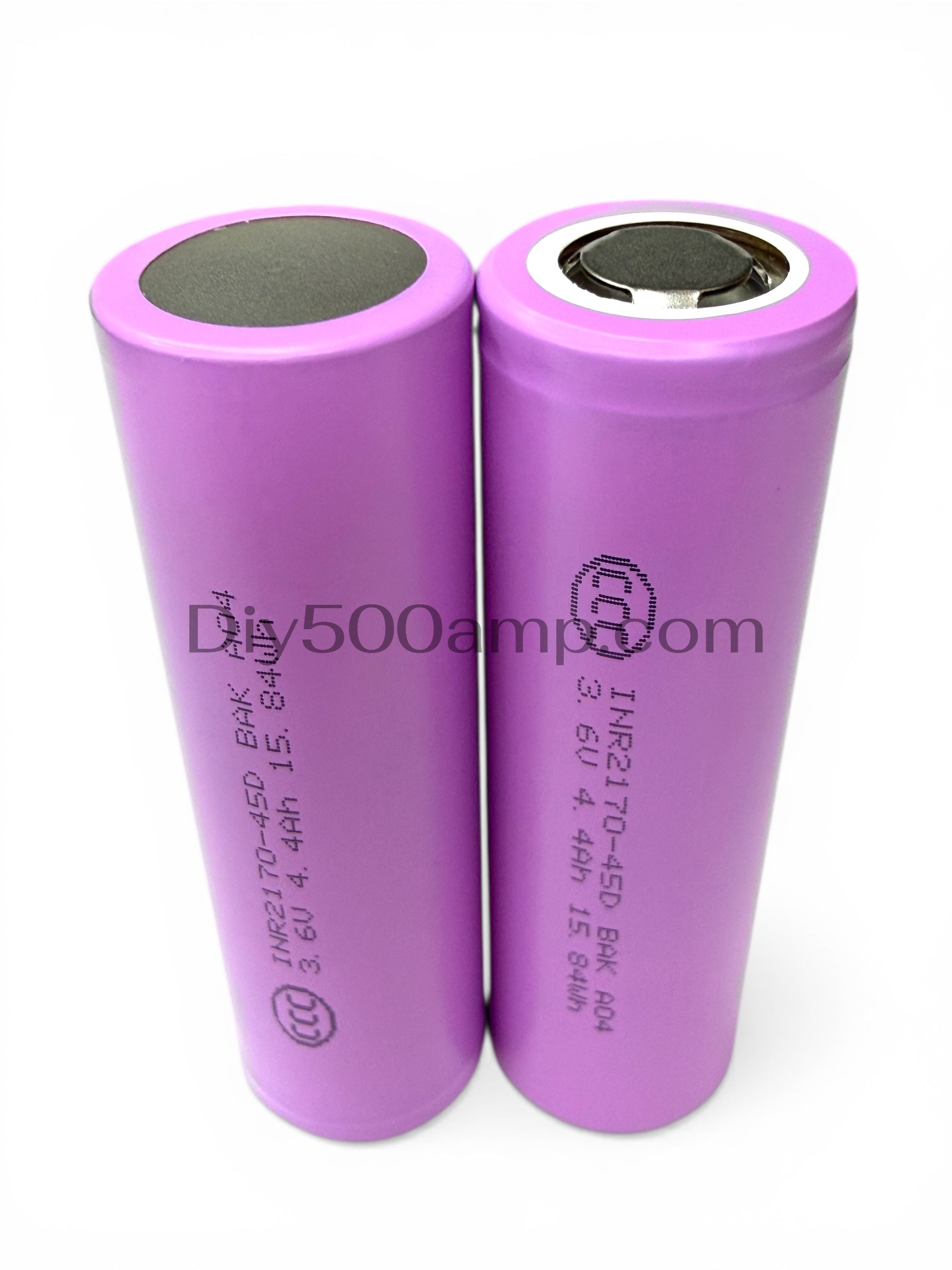
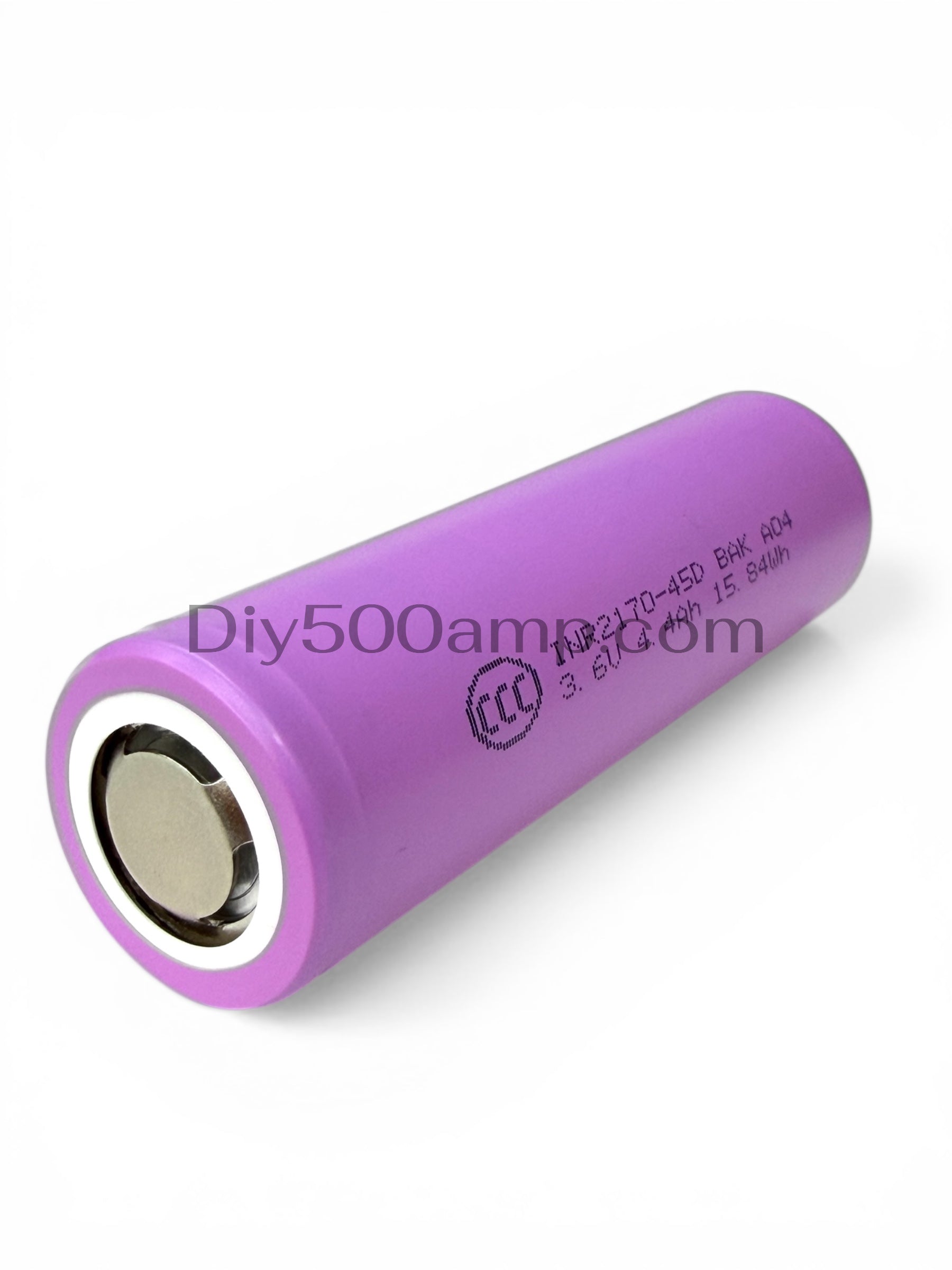
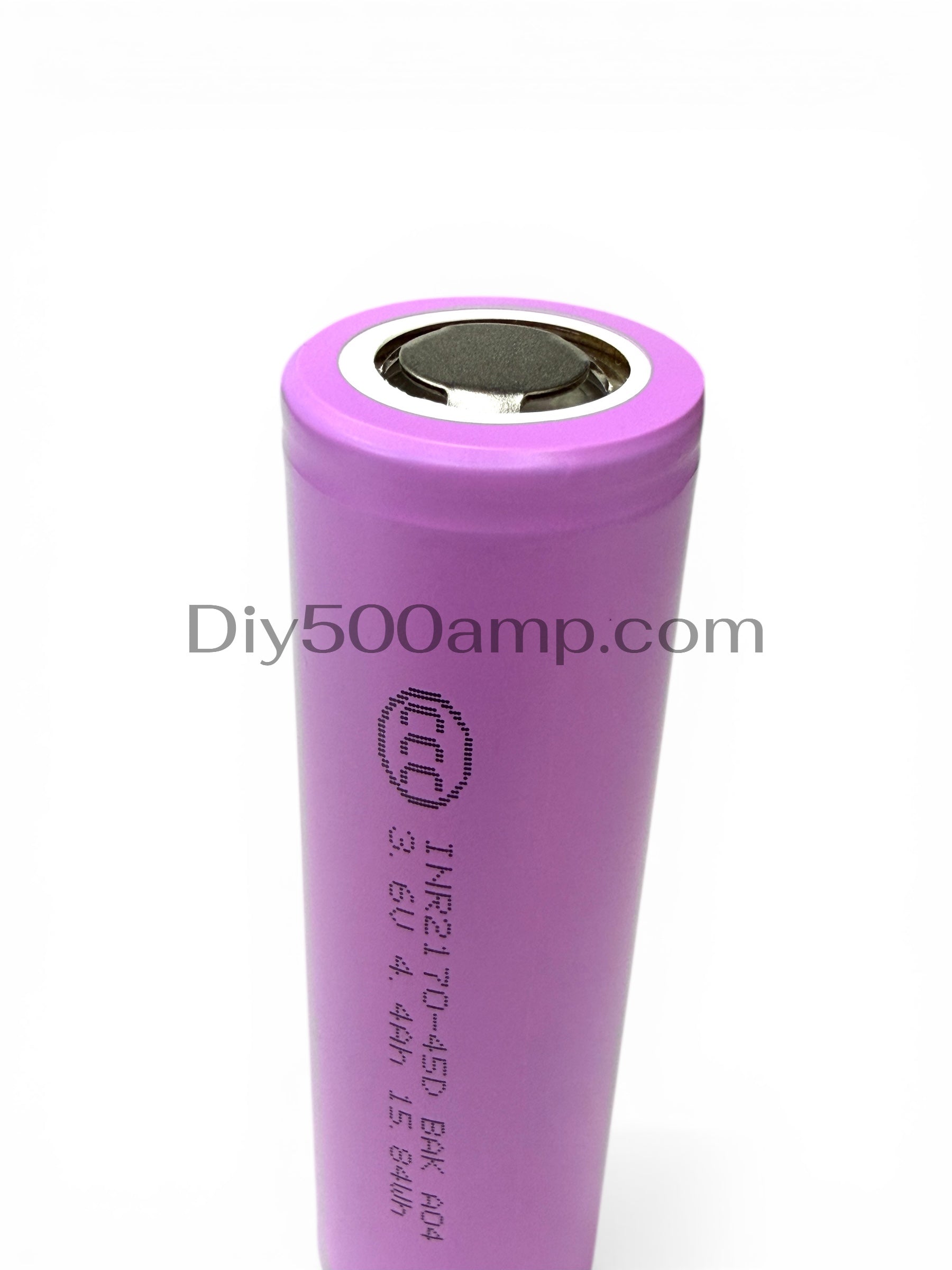
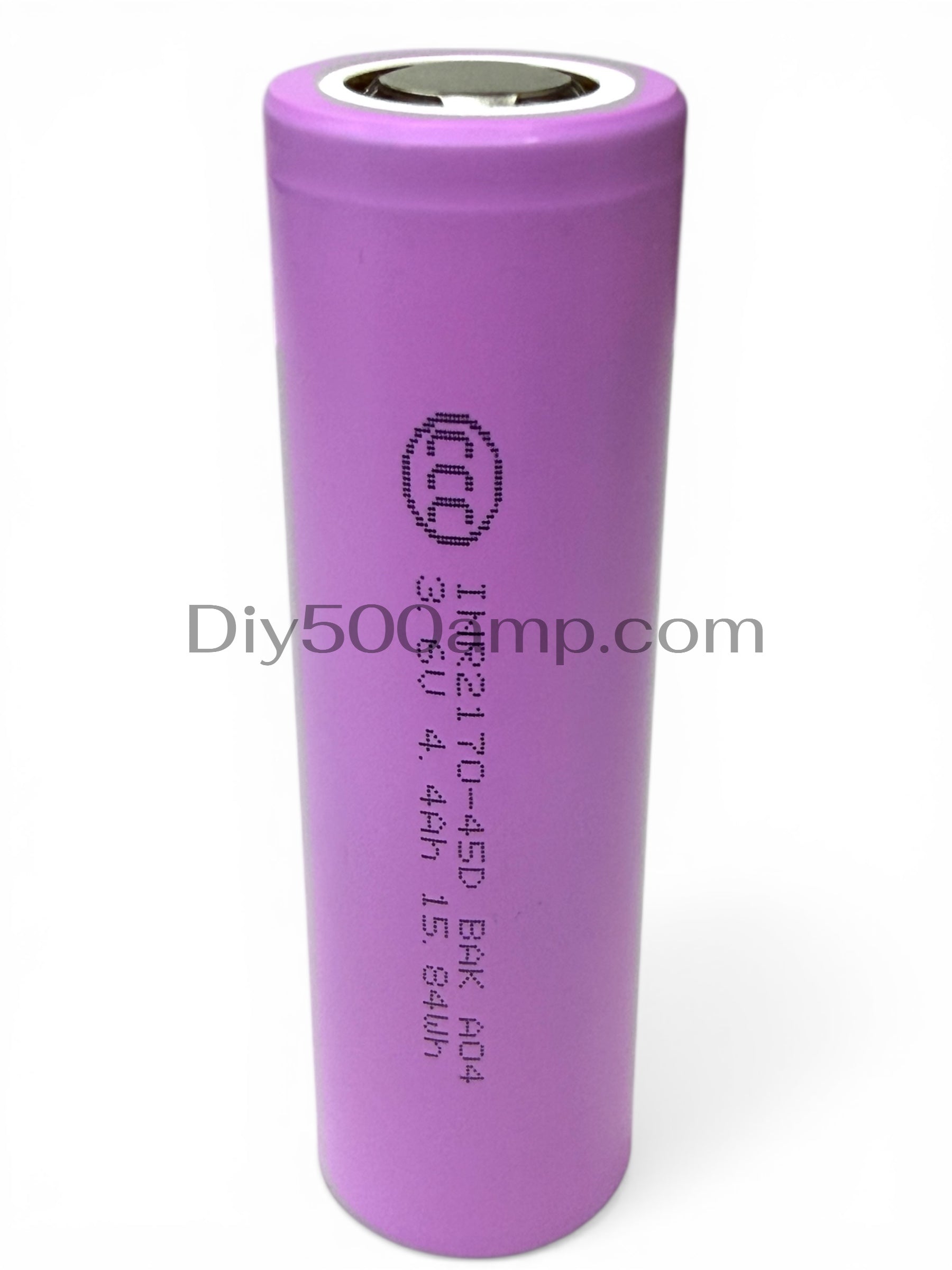
BAK 45D
Built for high-current packs where voltage sag, heat, and current sharing matter.
Manufacturer data sheet
Cell at a glance
Datasheet-verified specification
Full technical specification
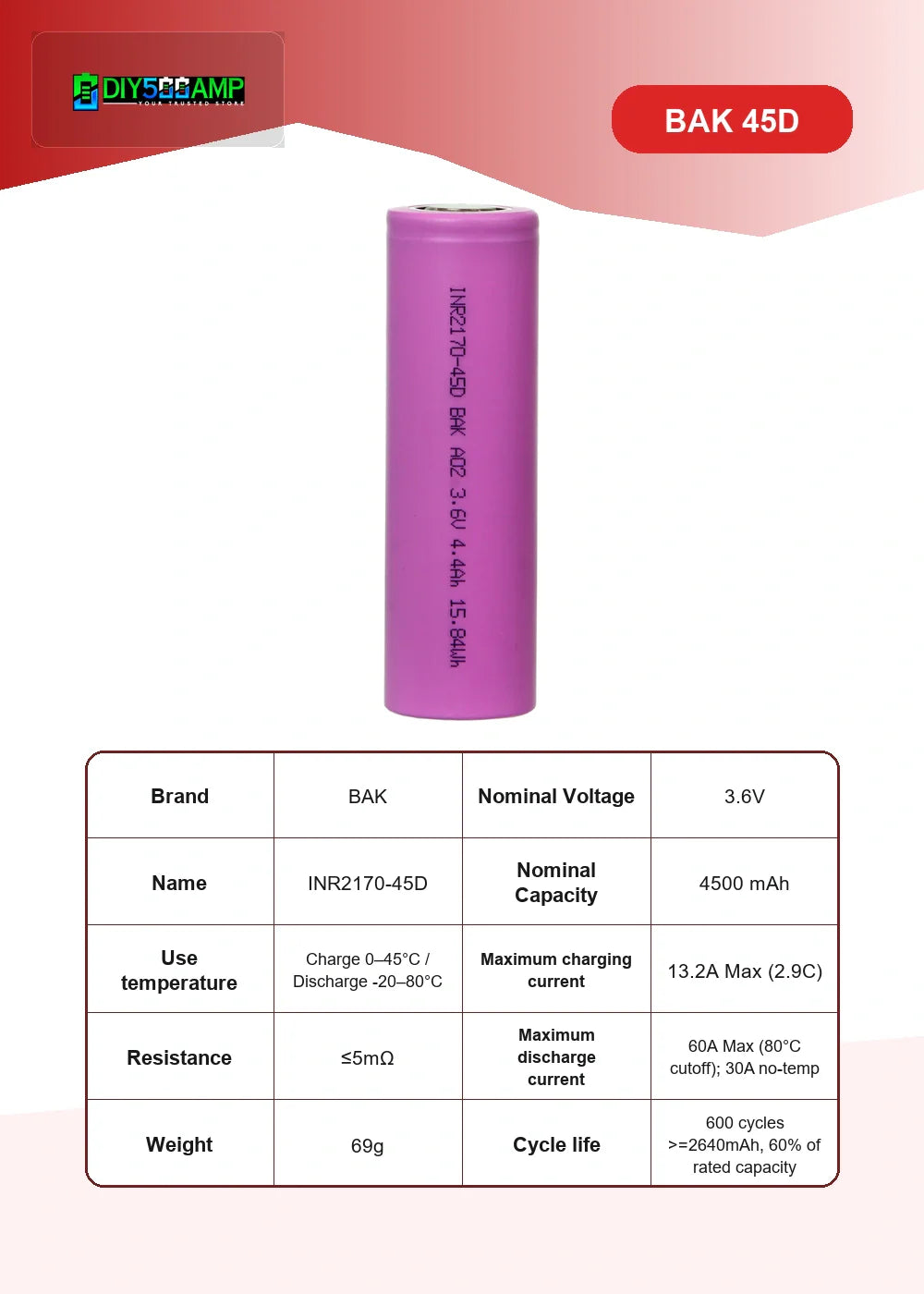
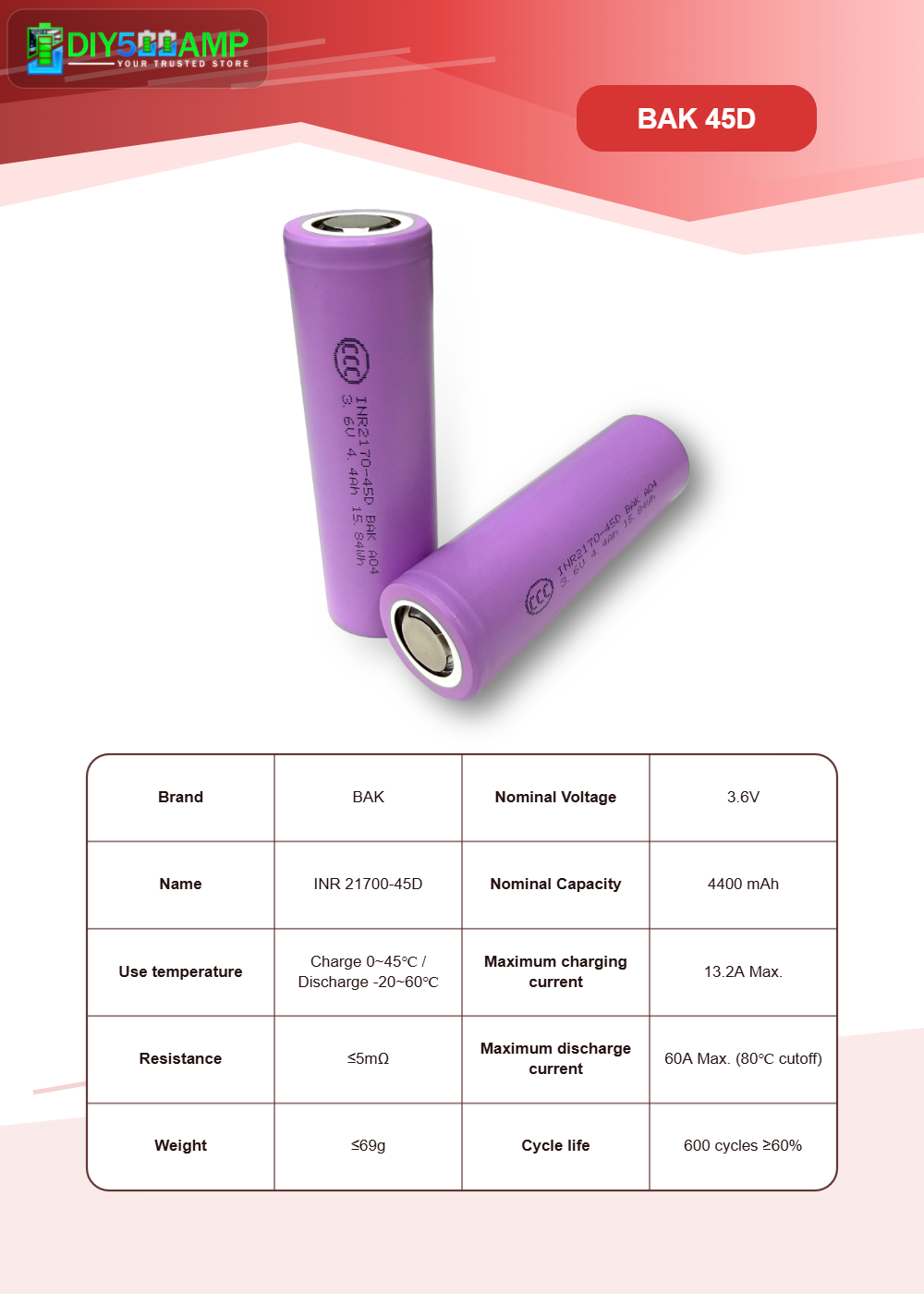
| Store SKU | BAK-45D-21700-B1 |
|---|---|
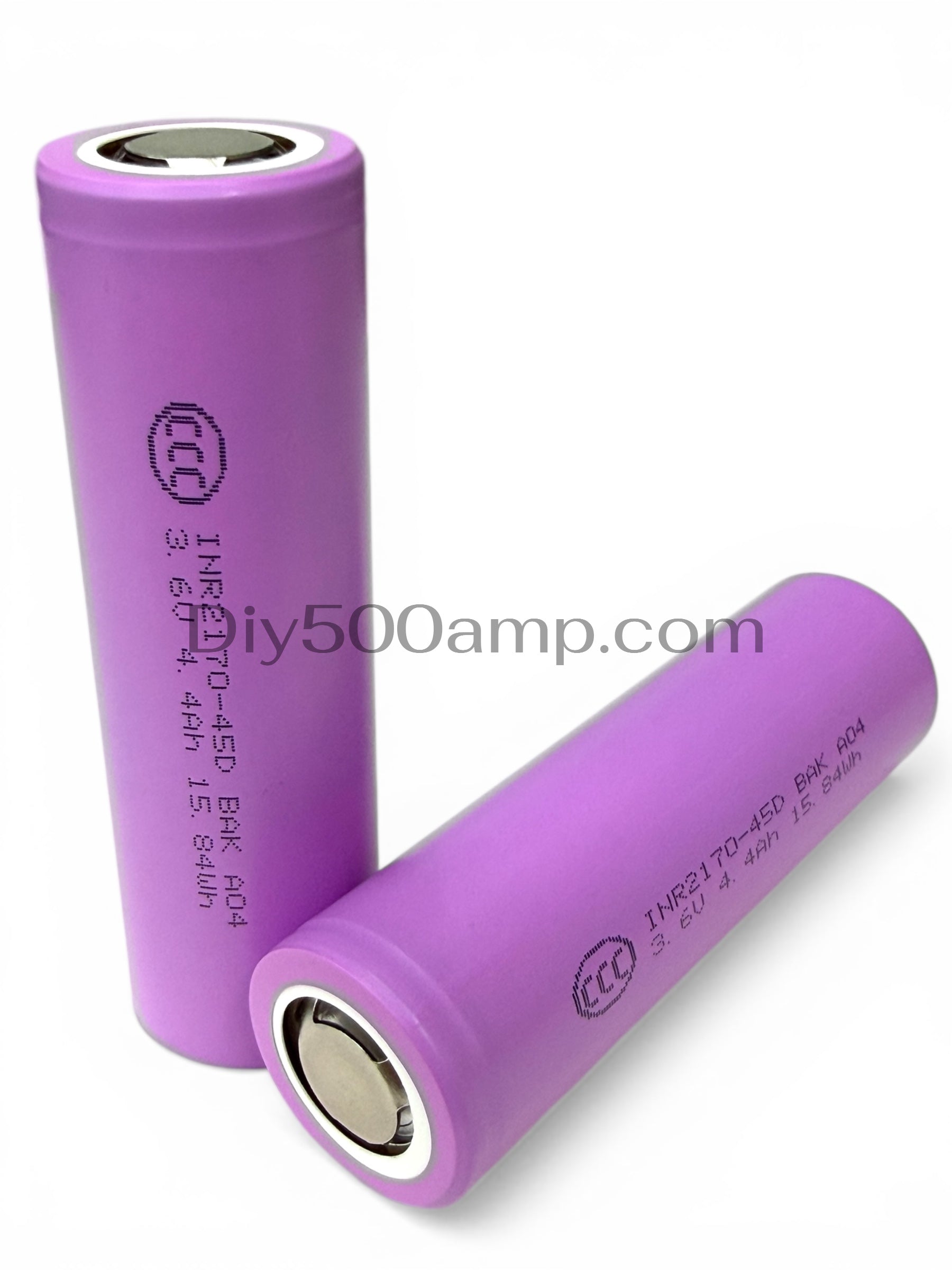
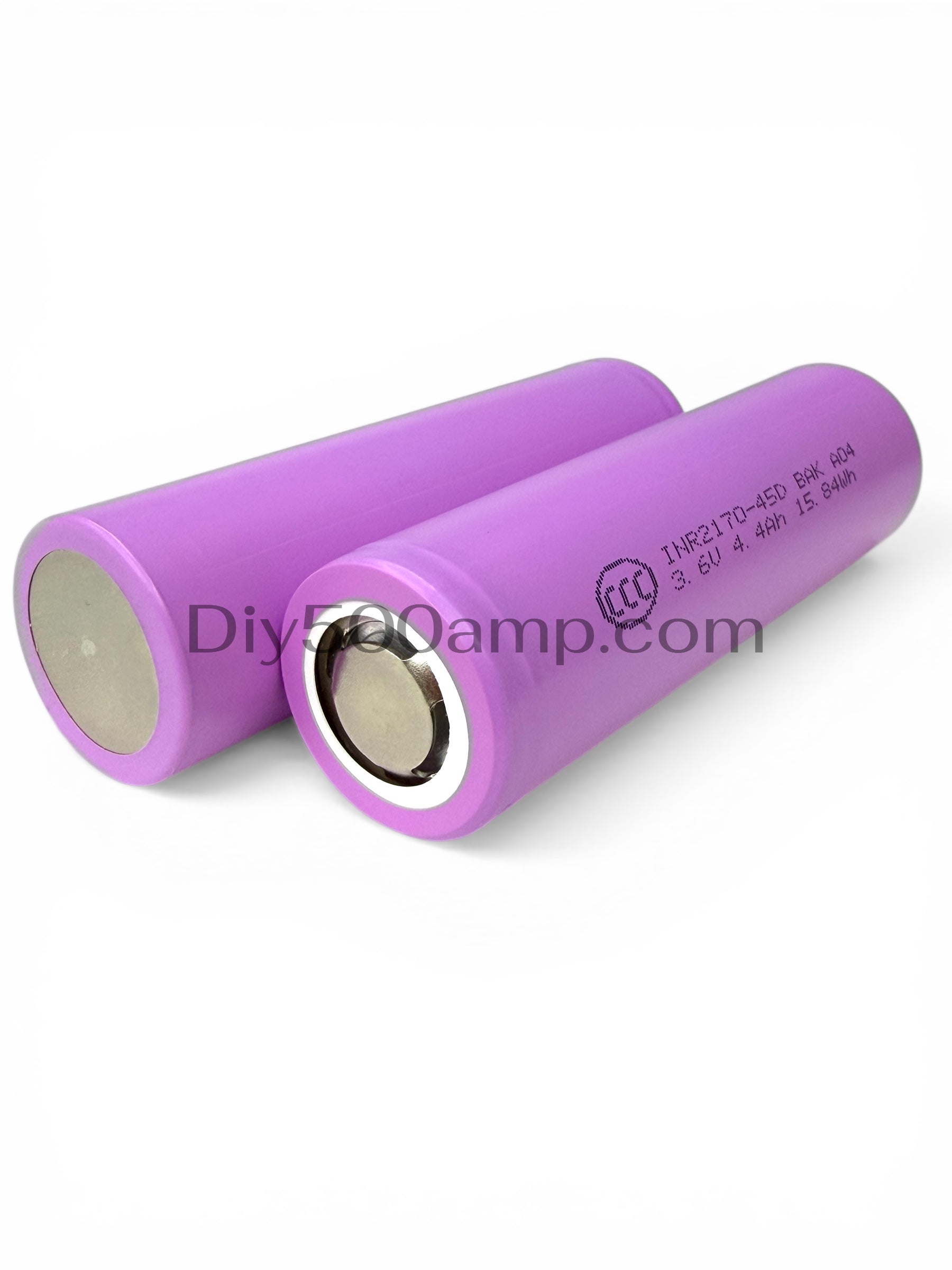
| Manufacturer / model | BAK INR2170-45D |
| Format / chemistry | 21700 / Li-ion |
| Rated capacity | 4500 mAh (minimum 4400 mAh) |
| Nominal voltage | 3.6V |
| Full-charge voltage | 4.2V |
| Discharge cutoff voltage | 2.5V |
| Standard charge current | 2.2A |
| Maximum charge current | 13.2A |
| Continuous discharge rating | 30A |
| Temperature-limited continuous rating | 60A |
| Initial internal resistance | <=5 mOhm |
| Weight | 69g |
| Dimensions | Diameter <=21.45 mm; height <=70.75 mm |
| Charge temperature range | 0C to 45C |
| Discharge temperature range | -20C to 80C |
| Cycle-life reference | 600 cycles >=2640mAh, 60% of rated capacity. |
| Protection | Unprotected industrial cell. The finished device or battery pack must provide appropriate protection. |
Simple selection guide
Is this the right cell for your build?
Match the cell to the job, then confirm the manufacturer limits for the finished pack.Best match
High-current packs where power delivery and voltage stability matter more than maximum runtime, with load and heat validated below the data sheet ceiling.
A better alternative when
Choose a higher-capacity cell when runtime and energy density matter more than strong current delivery and low voltage sag.
Application guide
Where this cell fits
RC / UAV, high-current tools, e-bike / mobility
Runtime-first packs, energy storage, backup systems
Vape and e-cigarette devices
Keep the finished pack within every manufacturer voltage, current, and temperature limit.
Engineering limits
Current limits
Manufacturer continuous-discharge ratings only. Pulse and over-current laboratory values stay on BatteryRealData.The 60A value is temperature-limited. The pack planner uses the 30A continuous value without that higher-temperature condition and the 80C cutoff condition.
Show current and runtime examples Optional 1C references and idealized runtime estimates
Current envelope
Relative current values from the matched manufacturer data sheet. Bar length is comparative, not a recommendation.
Current and runtime translation
Idealized constant-current runtime based on nominal capacity. Real packs deliver less because voltage sag, heat, cutoff voltage, and losses matter.
Real discharge testing
Tested by BatteryRealData
This Shopify summary includes only tests at or below the published 60A temp-limited continuous-current ceiling.

- Raw capacity
- 4565 mAh
- Raw energy
- 16.7 Wh
- Max observed temp
- 27.4C

- Raw capacity
- 2470 mAh
- Raw energy
- 8.42 Wh
- Max observed temp
- 83.2C
This run uses the manufacturer's temperature-limited current rating.
These curves are observed laboratory results, not operating recommendations. Voltage and temperature are plotted against measured raw capacity for the selected run.
Displayed test-current range: 1A to 60A
- Best raw capacity
- 4565 mAh
- Best raw energy
- 16.7 Wh
- Published continuous-current ceiling
- 60A temp-limited
Only tests inside the matched data sheet continuous-current range are summarized here. BatteryRealData may separately include controlled pulse or over-current research; those laboratory stress tests are not product ratings or operating instructions.
View datasheet-range graphs and test resultsPack planning aid
Current per cell calculator
Enter the total pack current and the number of parallel cells. This checks current sharing against the unconditional continuous value listed above.Planning aid only. It assumes equal current sharing between matched cells. It does not account for heat, aging, imbalance, conductor resistance, duty cycle, enclosure airflow, or BMS limits.
Read before purchase and use
Safety warning for lithium-ion battery usage
Customers should understand lithium-ion battery handling and safety before purchase. Lithium-ion cells can cause fire, burns, venting, or explosion if misused, overcharged, shorted, crushed, punctured, overheated, or physically damaged.
Use only with a compatible lithium-ion charger, BMS, or protection circuit designed for the cell voltage, current, and temperature limits. Never leave batteries charging unattended. Charge and store on a fire-resistant surface away from combustible materials.
By purchasing and using lithium-ion cells, the user assumes responsibility for correct handling, storage, charging, pack design, and application suitability.
Important usage guidelines
- Not for use in e-cigarettes, vape devices, or similar devices.
- Always use in a protected battery pack or properly controlled test fixture.
- Do not exceed the data sheet maximum charge voltage.
- Do not discharge below the recommended system cutoff voltage.
- Do not charge or discharge outside the data sheet temperature limits.
- Do not carry loose cells in pockets, bags, or toolboxes where they can contact keys, coins, tools, or other metal objects.
- Store and ship cells in protective cases or insulated packaging.
- Do not use batteries with torn wrappers, missing insulator rings, dents, rust, odor, leakage, deformation, heat damage, or visible damage.
- Do not solder directly onto cell terminals. Use proper spot-welding methods only.
- Do not alter, dismantle, puncture, crush, burn, immerse in liquid, or expose cells to open flame.
- Keep away from children and pets.
Pass all safety information to end users to promote safe handling, correct pack design, and proper use.
Common questions
BAK 45D FAQ
Does this cell include built-in protection?
No. It is an unprotected industrial cell. A compatible device or finished pack must provide over-charge, over-discharge, over-current, short-circuit, and thermal protection as required by the application.
Is the maximum current the normal operating target?
No. A manufacturer maximum is a limit under stated conditions, not an automatic long-term design target. Use headroom and validate the finished pack under the actual load, duty cycle, cooling, and temperature limits.
Can I solder directly to the cell?
No. Direct soldering can overheat and damage the cell. Use correctly configured spot welding and suitable interconnect material.
Can I mix this cell with another model or an older batch?
Do not mix different models, ages, capacities, internal-resistance groups, batches, or states of charge in one pack. Build with matched cells and balanced parallel groups.
Can I carry or store the cell loose?
No. Isolate the terminals in a protective case or insulated packaging. Never carry loose cells with keys, coins, tools, or other conductive objects.

